
Step-by-Step Guide to Importing Cameras for Retail & Wholesale in Cyprus
IT TRADING
11/27/20255 min read

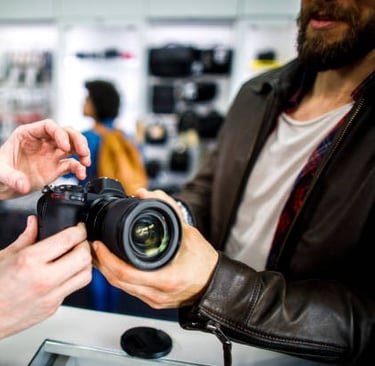
The reason why it is important to understand the rules of imports.
The importation of electronics such as cameras does not entail order placing. Step-by-Step Guide to Importing Cameras for Retail & Wholesale in Cyprus helps you understand what customs expects and how to meet their requirements. When you are able to obey the rules you are able to save time and money and also save your business image. Long term success in any business would require mastering of these steps of compliance and customs that are mandatory to be observed by anyone intending to venture into camera sales.
Step 1: Investigation of the Market and Legal Processes.
Know your market before you begin importing. Determine the local demand of the camera brands and models. Step-by-Step Guide to Importing Cameras for Retail & Wholesale in Cyprus begins with careful research. Control of check Cyprus importation via Department of customs and excise and ensure that the products meet EU standards. Cameras fall within individual HS (Harmonized System) code. This categorization defines the level of responsibility, VAT and paperwork. A small amount of research at the beginning helps in avoiding troubles in the future.
Step 2: Select Trustworthy Partners.
Looking at suppliers who can be trusted is the key to your import business. You may be purchasing in Japan, China or any other countries in the EU but be sure that your suppliers are credible. Step-by-Step Guide to Importing Cameras for Retail & Wholesale in Cyprus emphasizes building relationships with manufacturers that provide genuine products and meet CE certification standards. Request samples prior to bulk buying. Greenlight warranty and service promises. Good suppliers believe in long-term relationships and assist in maintenance of quality of the products.
Step 3: Knowledge of Customs Duties and Vat.
The custom duties and VAT which are applied to imported goods in Cyprus varies by their origin. In case your cameras are imported into the EU by another country, no customs duty may be paid. Nevertheless, the VAT rate, which is generally 19 percent, is imposed. Step-by-Step Guide to Importing Cameras for Retail & Wholesale in Cyprus explains that for imports from non-EU countries, duties are based on the product’s CIF value (Cost, Insurance, and Freight). Never wrongly compute the overall cost to ascertain the selling price as well as the profit margins.
Step 4: Prepare All the requisite documents.
The efficient processing of the clearing of the items is affected by correct documentation. Step-by-Step Guide to Importing Cameras for Retail & Wholesale in Cyprus includes these essential papers:
• Business Invoice: The specifications of the purchase such as amount and price.
• Packing List: This is a description of what is on each package.
• Bill of Lading or Air Waybill: There part of the proof, which demonstrates the shipment of the supplier.
• Import Declaration: Delivered to the Cyprus Customs.
Every paperwork should be correct and correspond to the shipment. The slightest error will slow down your merchandise.
Step 5: Compliance and Certification of Product.
Cyprus is a member of the EU and imported electronics must comply with the stringent safety and environmental standards. Step-by-Step Guide to Importing Cameras for Retail & Wholesale in Cyprus stresses the importance of CE marking, which confirms that the cameras meet EU safety rules. The customs can take back or confiscate non-compliant products. Insist on compliance certificates before delivery by suppliers.
Step 6: Shipment and Insurance Organization.
The selection of shipping is a time and money-saving decision. Large wholesale deliveries are best transported through the sea freight, whereas small or urgent deliveries are better treated to the air freight. Step-by-Step Guide to Importing Cameras for Retail & Wholesale in Cyprus recommends always insuring your shipments. Insurance covers the damage during transit, theft or loss. Compare logistics companies, check their reviews and choose one of them that has experience with electronics.
Step 7: The Cyprus process: Customs Lucrarity.
When the shipment is received, the customs officials will check documents and meet the requirements of products. Step-by-Step Guide to Importing Cameras for Retail & Wholesale in Cyprus highlights that working with a customs broker can simplify this stage. Brokers are licensed workers who do paperwork and negotiate with the customs officers on behalf of the consumers. They make sure that everything will proceed without issues and allow you to escape sanctions.
Step 8: Timely Pay Duties, VAT and Fees.
You have to pay the custom duties, VAT, and any administrative fee as soon as your goods are cleared. Step-by-Step Guide to Importing Cameras for Retail & Wholesale in Cyprus advises keeping all receipts and payment records. Such documents might be required in the future during filing of taxes or audit. Another way to have your goods out of customs storage faster is by paying at the earliest time possible.
Step 9: Warehouse and Distribution Establishment.
When you get through the customs with your cameras, get them put away. Store items under a cool area which is dry to preserve their product quality. Step-by-Step Guide to Importing Cameras for Retail & Wholesale in Cyprus encourages building a reliable distribution network for retail and wholesale clients. With an efficient supply chain, delivery will be speedy, customers will be pleased, and the sales will remain the same.
Step 10: VAT registration and maintenance of financial book.
VAT registration will be obligatory in case you conduct a business importing goods in Cyprus. Step-by-Step Guide to Importing Cameras for Retail & Wholesale in Cyprus stresses keeping accurate financial records, including invoices, import declarations, and payment proofs. This does not only ensure that your business will operate within the law, but also assists in keeping a good track of profits and taxes payable.
Step-by-Step Guide to Importing Cameras for Retail & Wholesale in Cyprus
A business of importing cameras to Cyprus can be a thrilling and lucrative business venture. Regardless of whether you operate a retail outlet or distribute electronics on wholesale, being aware of the rules and procedure might save your time, money, and agony. This Step-by-Step Guide to Importing Cameras for Retail & Wholesale in Cyprus will help you navigate customs procedures, taxes, supplier selection, and compliance requirements with ease. As a member of the European Union, Cyprus has certain import legislation, which is aimed at fair trade practice and safety of products. Through preparation, and proper knowledge, importing cameras is easy and you get to expand your business without any doubt.
Common Mistakes to Avoid
Most importers get into the process in hurry and do not understand the regulations. Step-by-Step Guide to Importing Cameras for Retail & Wholesale in Cyprus points out that errors such as incorrect HS codes, missing CE marks, or undervalued invoices can cause customs holds. Watch any detail and cooperate with reliable experts.
Advantage of Adhering to the Importation Processes.
When you follow the Step-by-Step Guide to Importing Cameras for Retail & Wholesale in Cyprus, you avoid unnecessary costs, delays, and legal issues. More to the point, you would be credible in the market. The retailers are confident in the conforming wholesalers. Authentic safe products are appreciated by customers. This in the long run will create the reputation of your brand and will help you to grow sustainably as a business.
Environmental and Ethical Environmental responsibility.
Importers should also pay attention to the environmental effects of electronics as part of the EU trade policy.
Conclusion
Importation of cameras does not require unnecessary complications. The experience of importing in Cyprus can be a sail, profitable and sustainable when you possess the correct knowledge and associates that can be trusted. Moreover, it is important not to forget that such keys to your success within a long-term are consistency, transparency, and compliance.
FAQs
Do I need a license of business in importing of cameras to Cyprus?
And yes, on either retail or wholesale importing there must be registration of business and an import license where necessary by the customs.
Can we import cameras which are owned by the other countries that are not members of EU like China?
Yes, you can. However, there will be custom charges, VAT will be paid and the products must be EU compliant such as, CE marking.


Contact
EVERNEED AI LTD
Limassol Office
Victory House, Arch. Makarios III Avenue 205, Limassol, 3030
Nicosia Office
Digenis Ave 81-83 Grivas 1st, 5th Floors, Nicosia, 1090
Hong Kong Office
SUITE C, LEVEL 7
WORLD TRUST TOWER
50 STANLEY STREET
CENTRAL HONG KONG
Connect
info@tradingitcyprus.com
+357 96166570
© 2026. Trading IT Cyprus All rights reserved.
Powered by Skyrocket Marketers Agency